Days 1 - 7
Day 1 (Oct 27) Sydney to Saigon: We left Sydney in the late afternoon and, after the smoothest check-in, flight and arrival process ever, we arrived at our Saigon (or Ho Chi Minh City if you are being official) hotel at around 9pm local time. However, as that equated to 1am AEST and as we were due to leave the hotel the next morning at 7:30 am, we limited our sightseeing to looking out our hotel window at the mish-mash of concrete buildings, motorbikes and taxis.
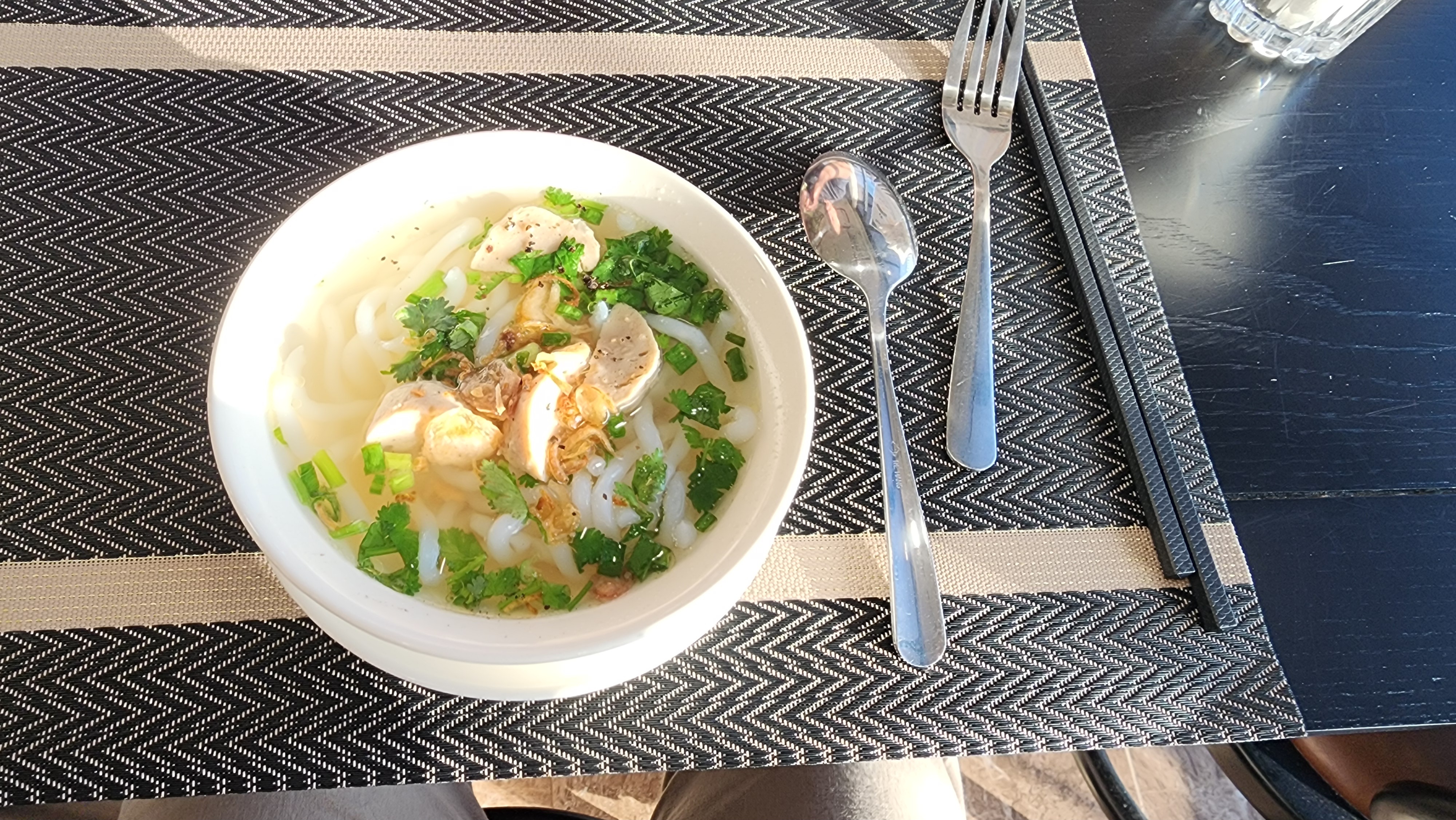
Day 2 (Oct 28) - Saigon to Hanoi to Ha Giang: Fortunately breakfast starts early here so we headed to our first Vietnamese breakfast at 6:30am to be in time for our lift back to the airport. I had beef noodles. We learned later from our guide that Vietnamese often have noodles three times a day, for breakfast, lunch and dinner.
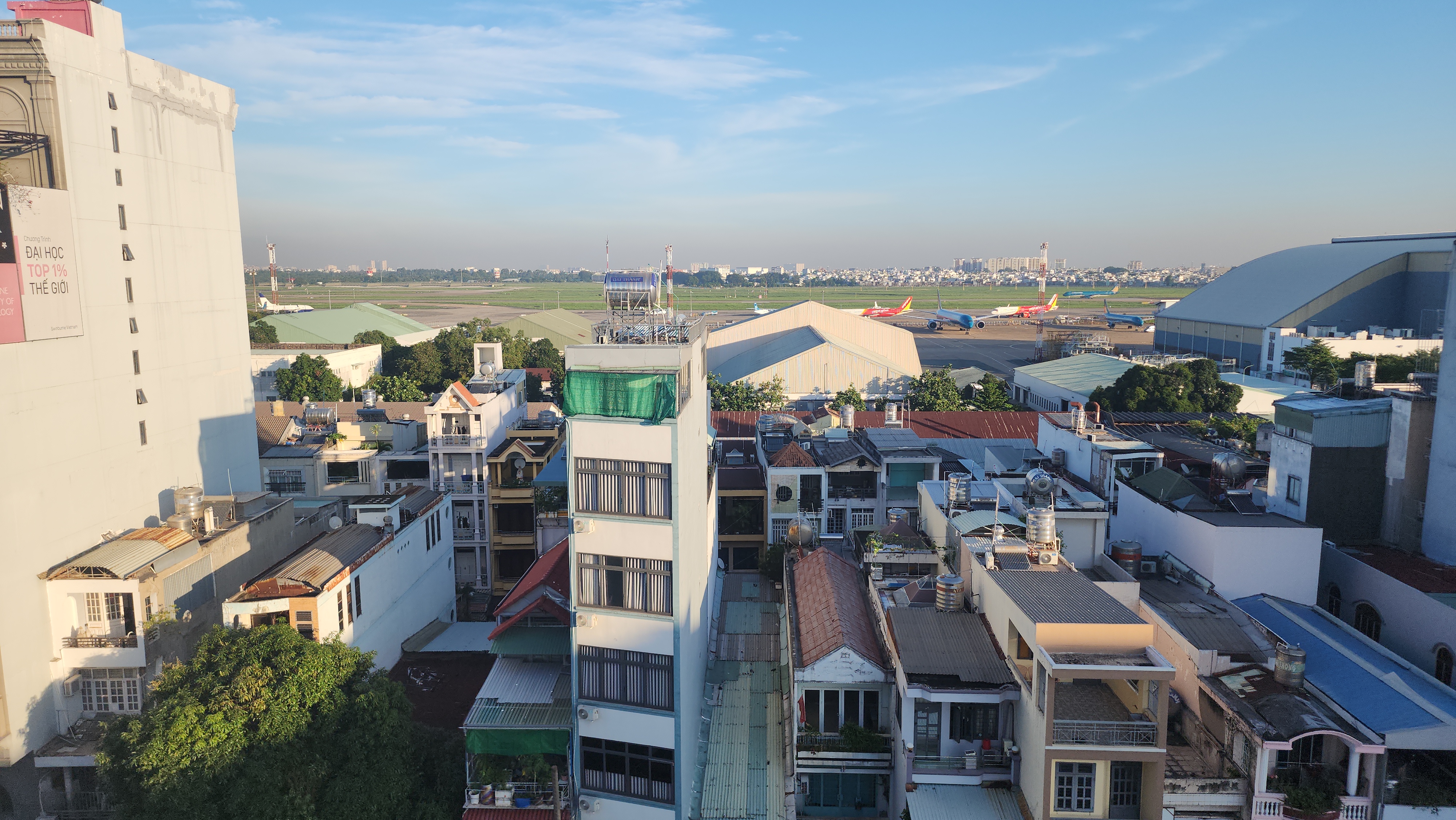
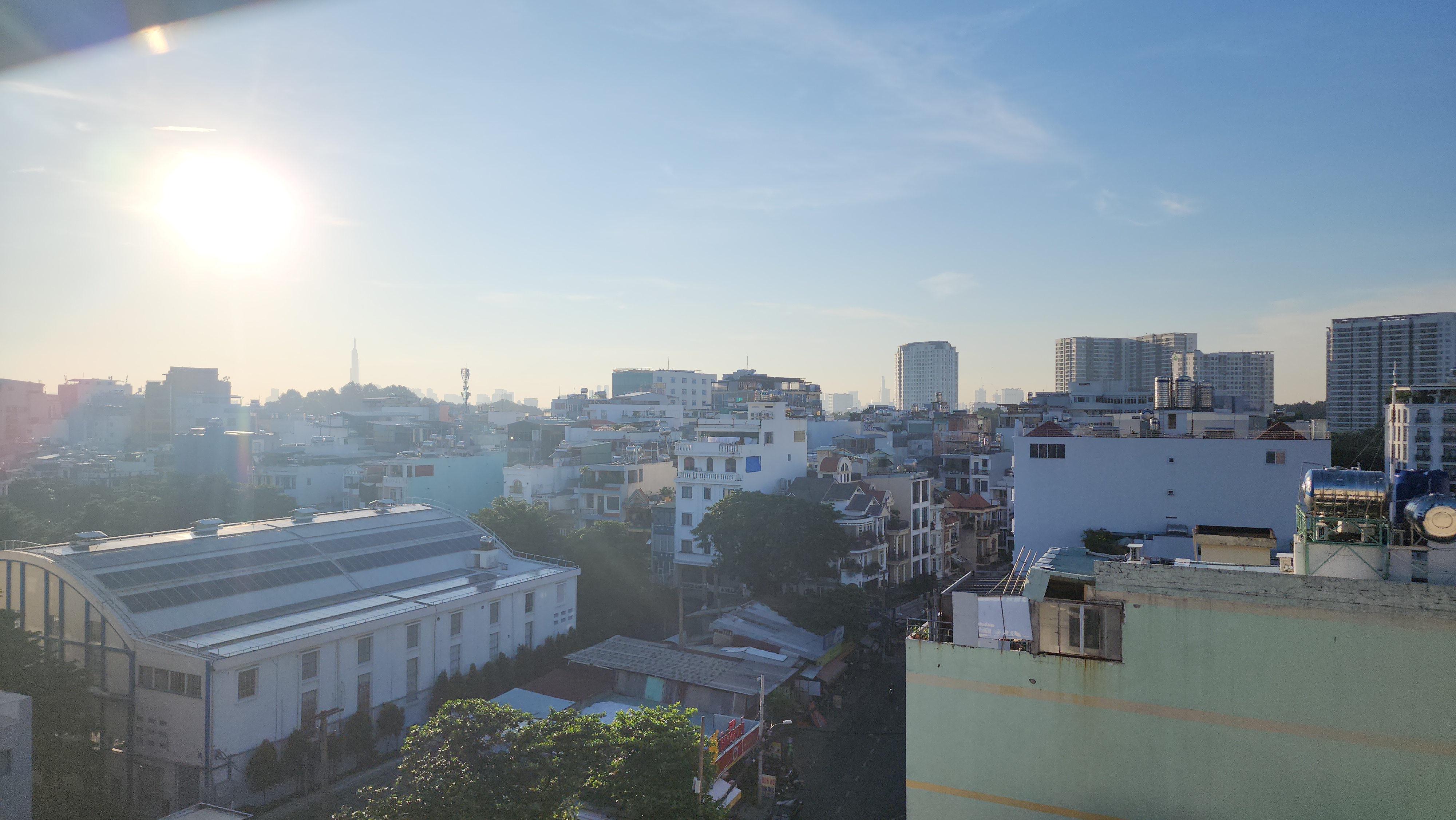
Having arrived late at night we had no concept of our surroundings. Turns out that our hotel was almost directly next to the airport. It was so well sound-proofed we had no idea. There was a view to the centre of Sài Gòn - a very smoggy view.
Our flight to Hanoi was delayed, which meant we didn't l leave until after lunch for our real first destination, the Dong Van area. We met Dat, our guide for the next 5 days and Tuan our driver, then set out for Ha Giang pronounced Ha as in haha, and Giang as Zang (like bang).
Luckily we are very used to long distance travel as the afternoon's drive was just over 5½ hours.
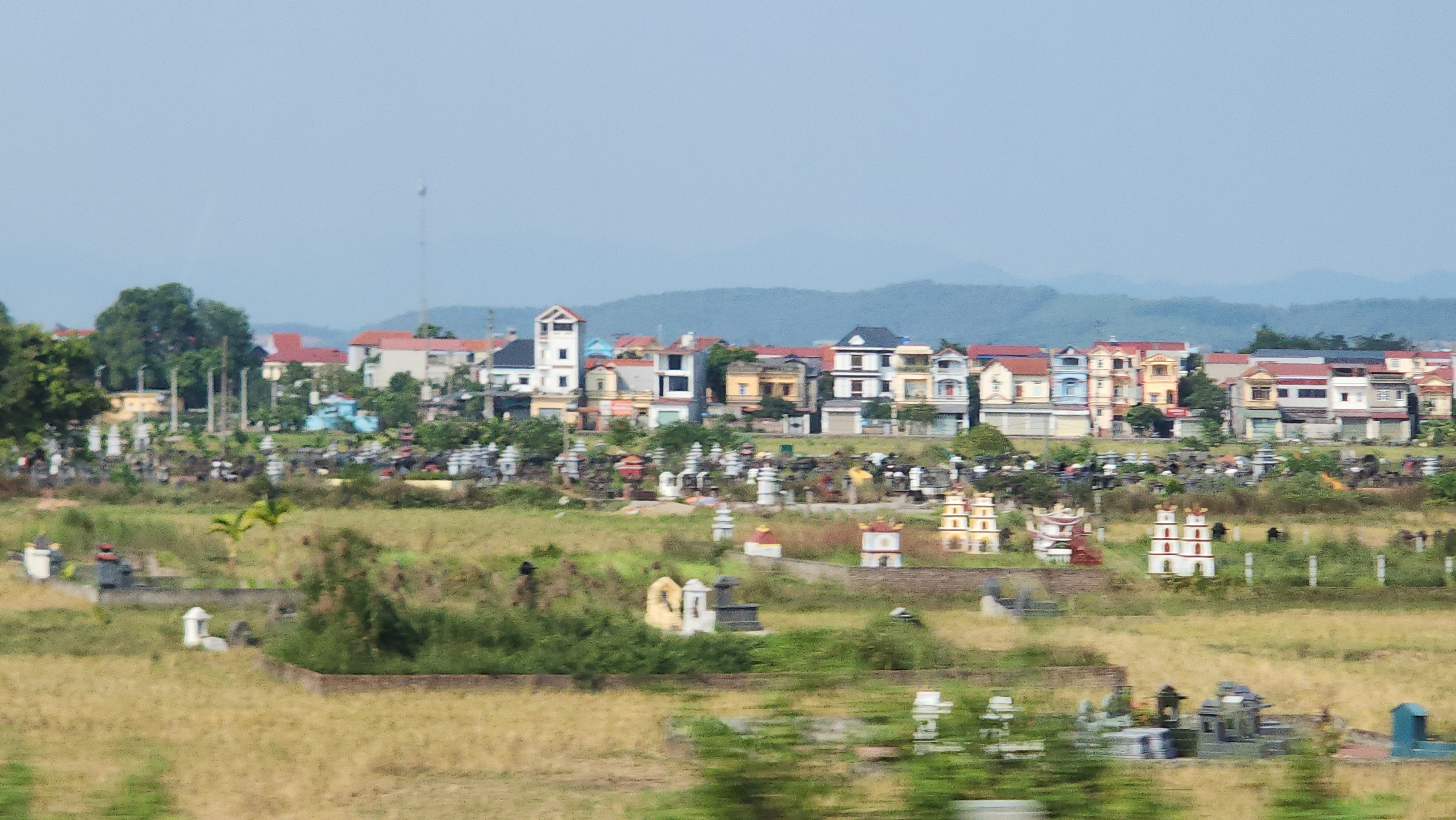
We learned so many things on the way. I noticed a number of churches along the route, some quite large. I had had no idea that there was a large Christian population in Vietnam, with somewhere up to 10% stating they are Christian. Buddhism is the largest religion and we saw many cemeteries and shrines in the fields as we headed north.
We saw many Eucalypts and Acacias, which we learned are mainly used for a large plywood industry. Much of the raw timber gets sent to China for processing but there are smaller factories in Vietnam also. In some places, very wonky sheets of plywood were drying along the roadside. The Eucalypts also get used for furniture.
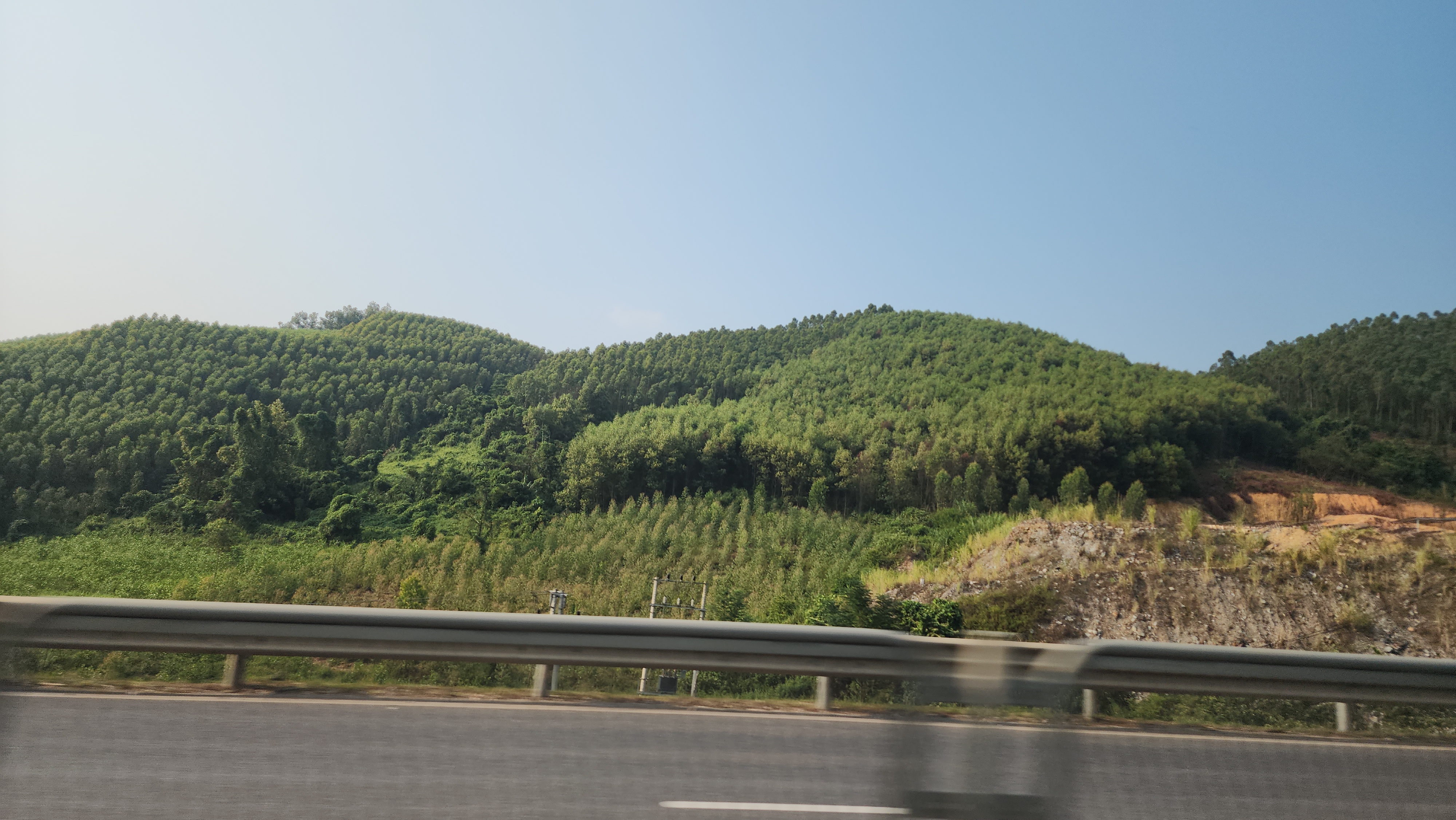
After about an hour travelling on an expressway, we turned off onto local roads, which we followed all the way to Ha Giang. The traffic was heavy and included large trucks heading for China, mopeds, bicycles and of course other cars. Passing involves putting on your fog lights, friendly here-I-come horn beeping and taking your chances. It does not seem to matter if you can see ahead much or not.
We were introduced to a very different style of house architecture. After the Vietnam war, the government divided the arable land up into family sized building plots, and set out them out along the roadsides. The narrow blocks result in a very distinctive style of tall, skinny houses, most of which seem to include a shop front at street level.
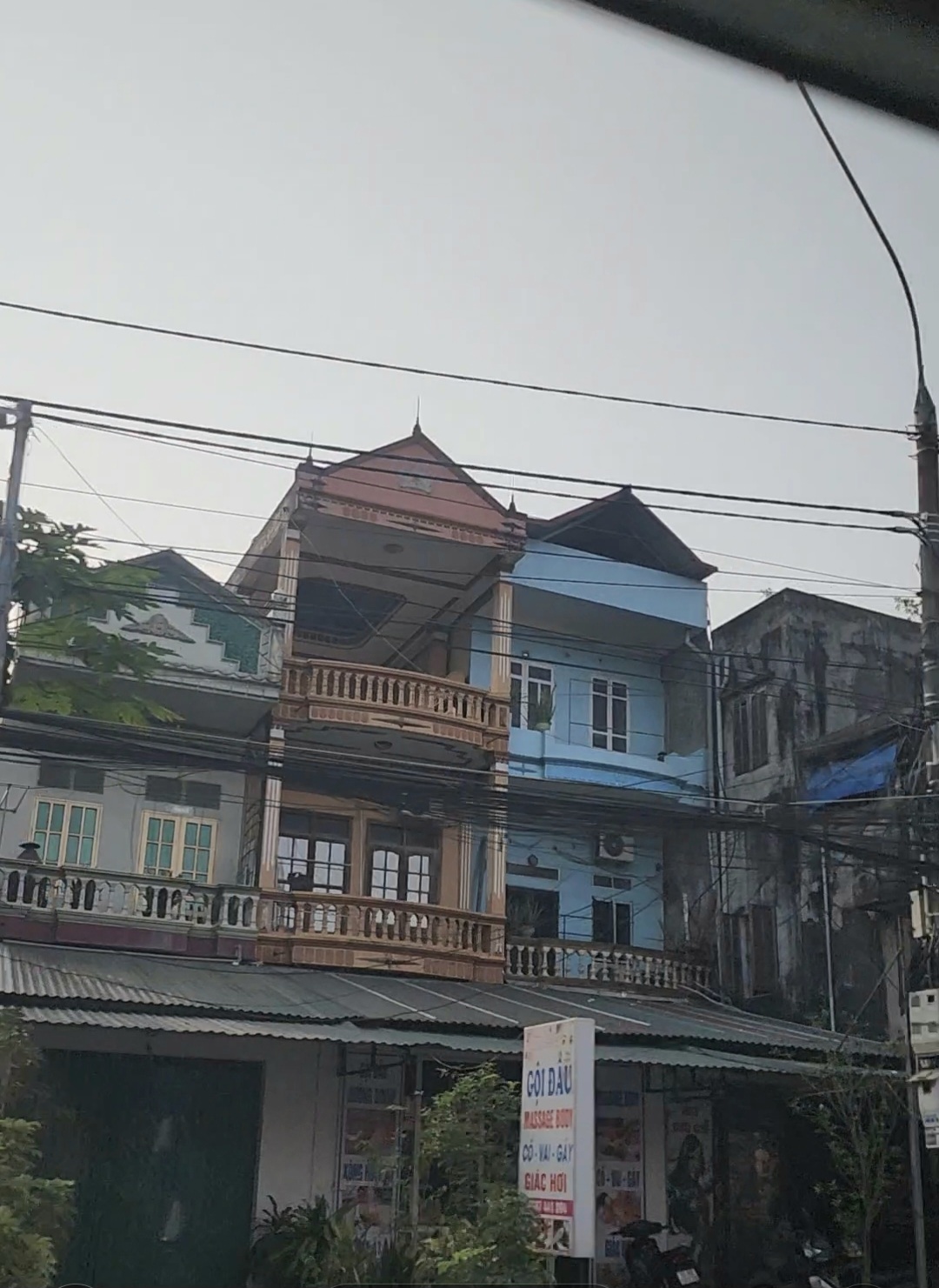
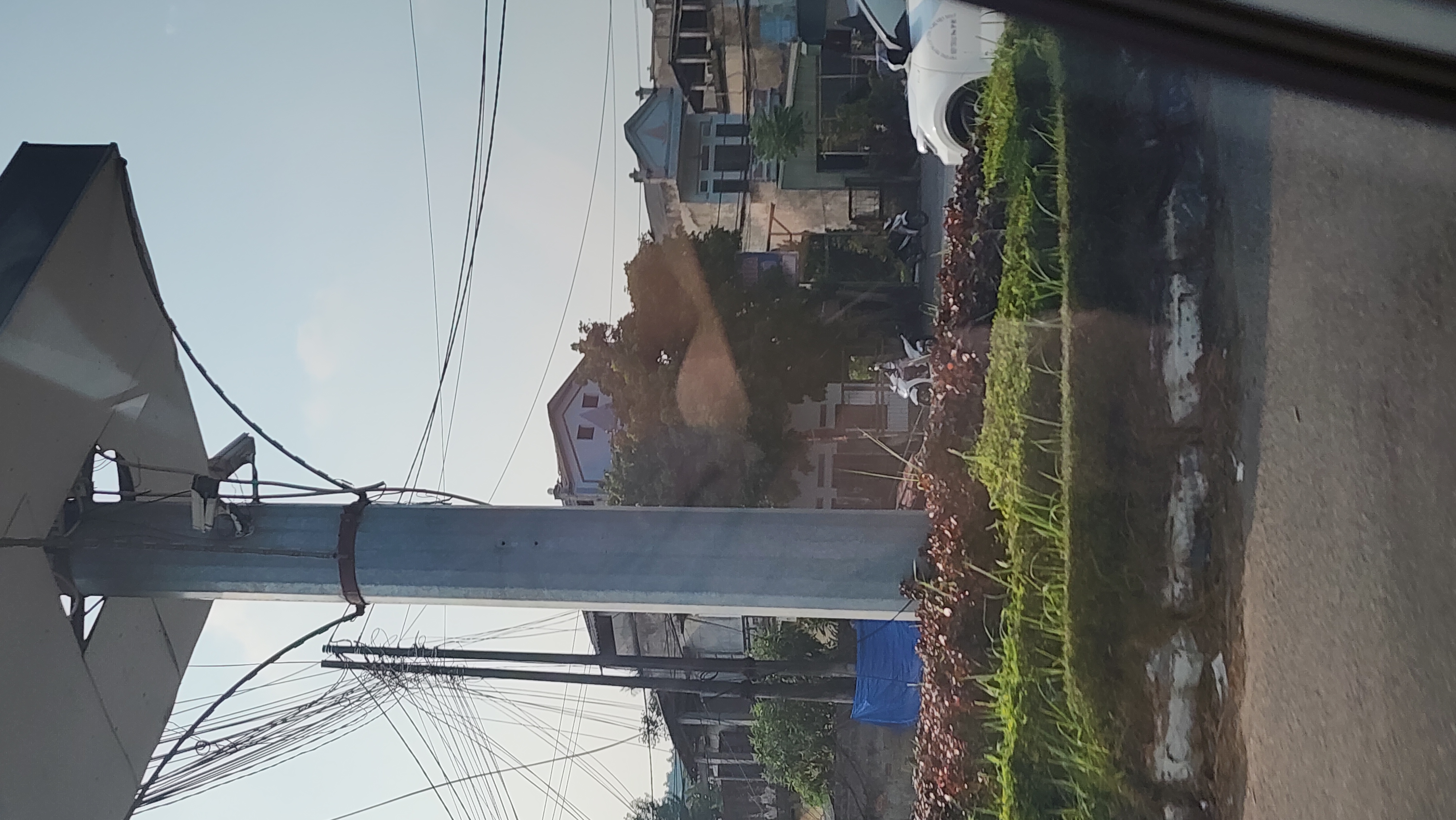
The power lines are similar to what we have seen in some other countries, a spider's web of wires that somehow seems to work.
Somewhere along the drive we stopped for a break - a nibble of boiled eggs and banana, already set out on the table. This seems quite common.
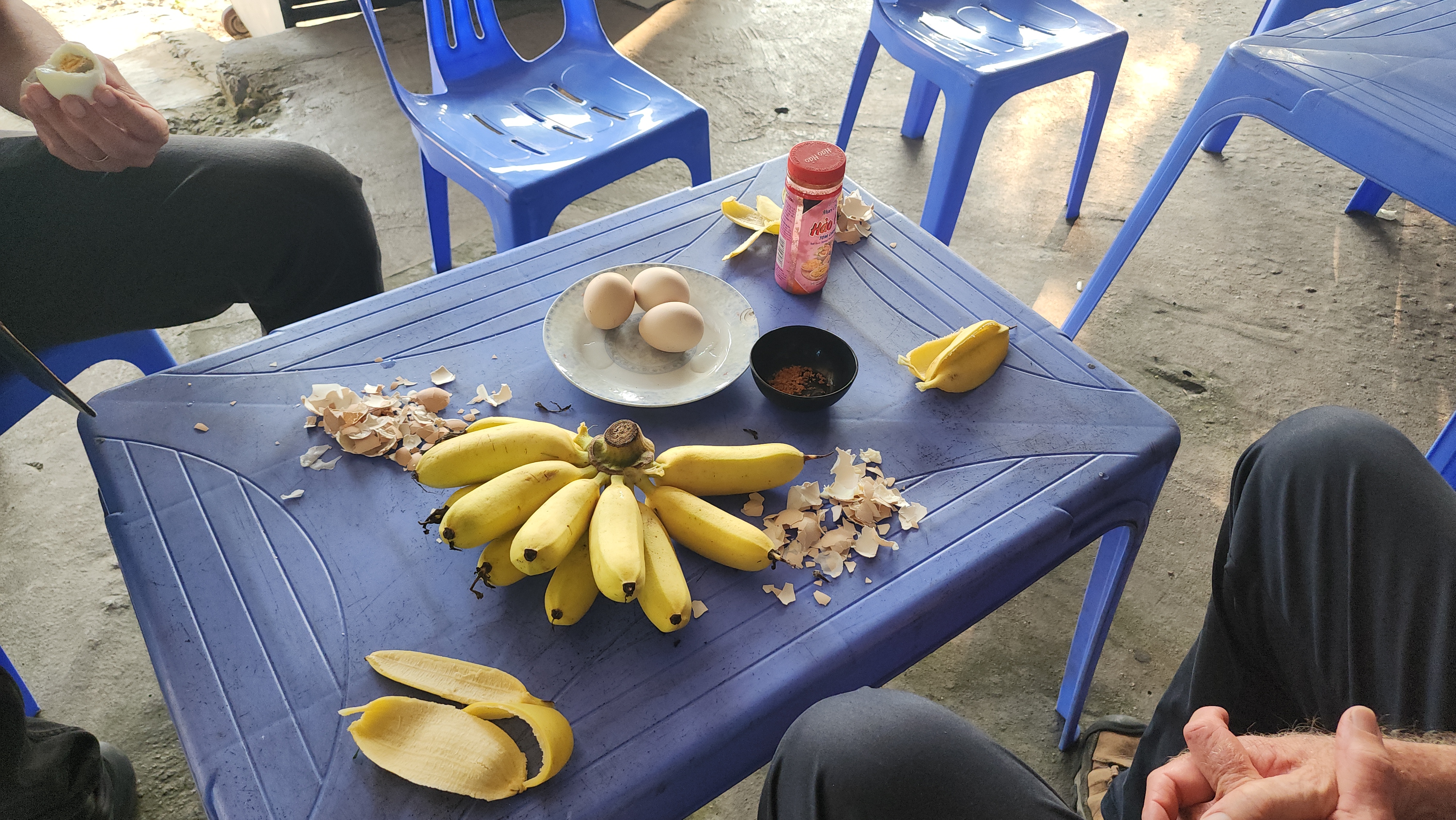
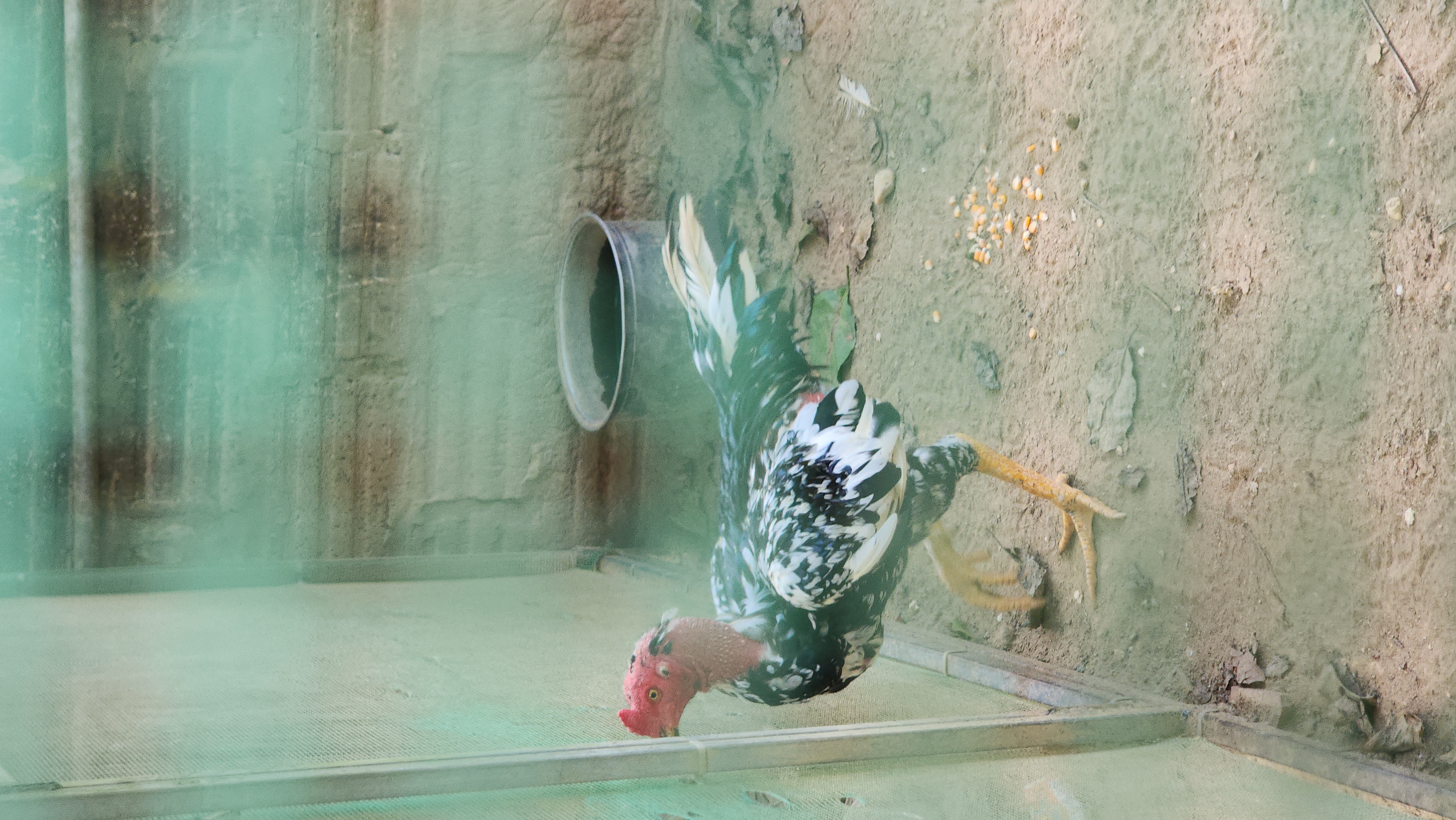
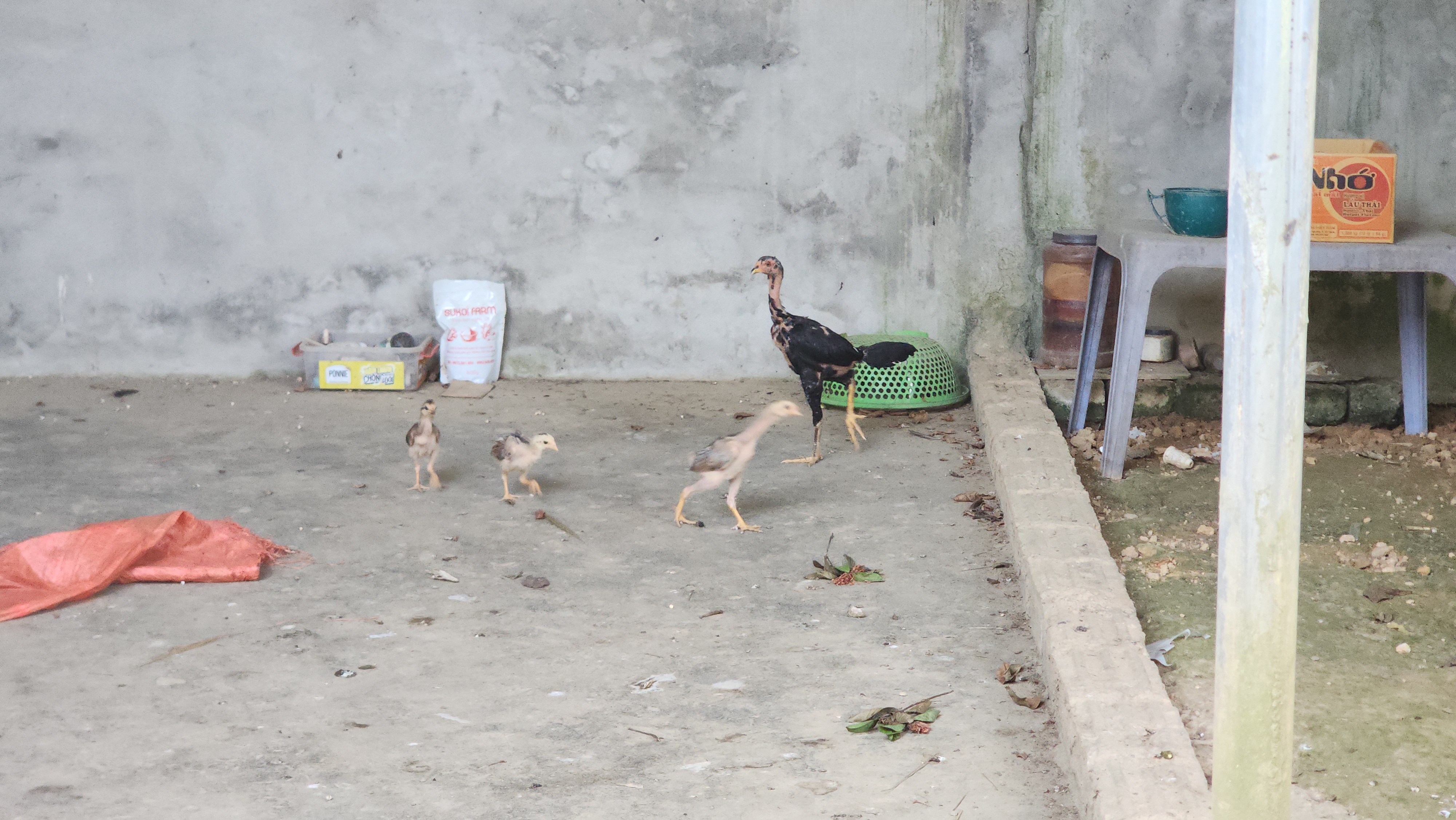
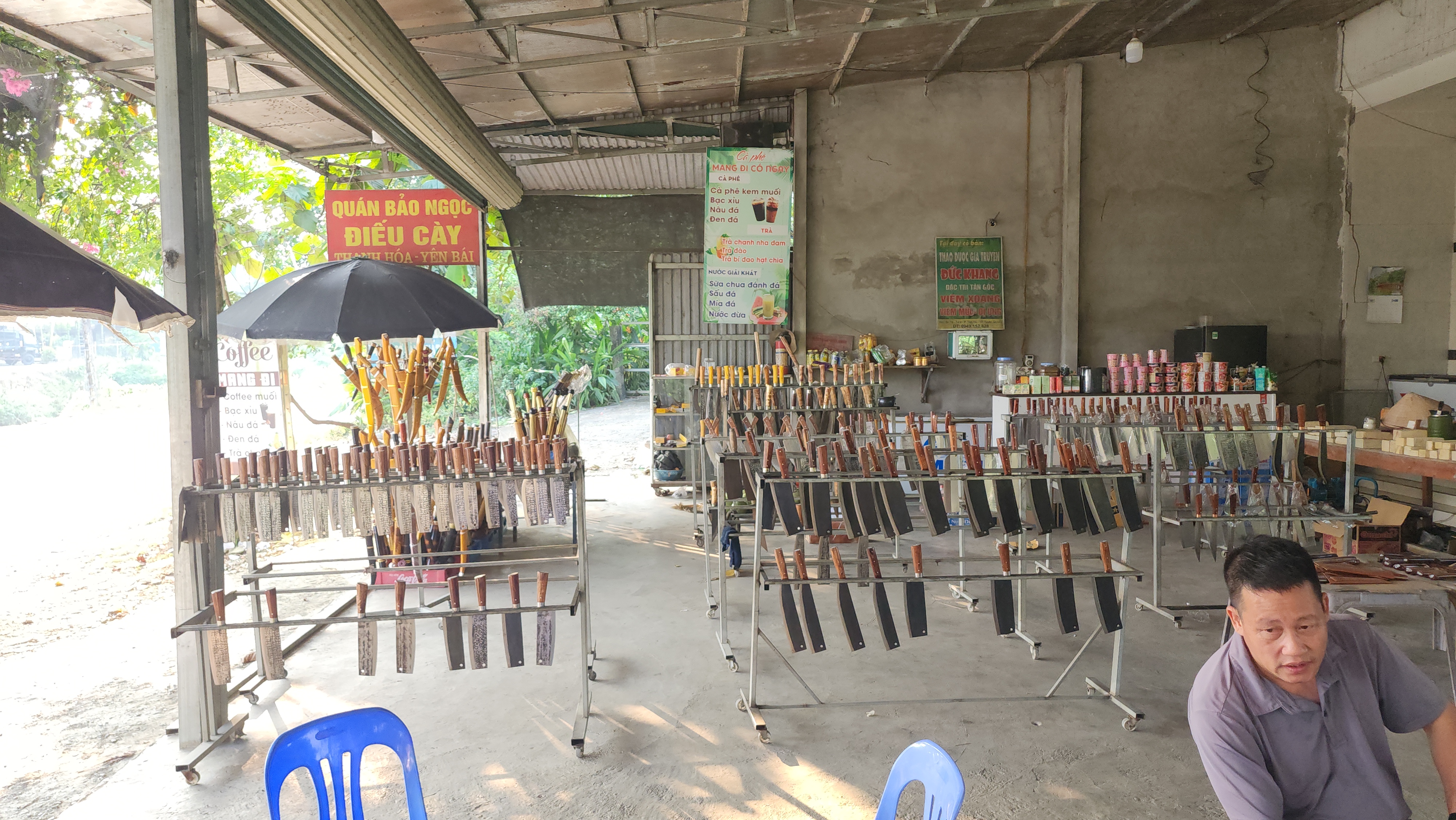
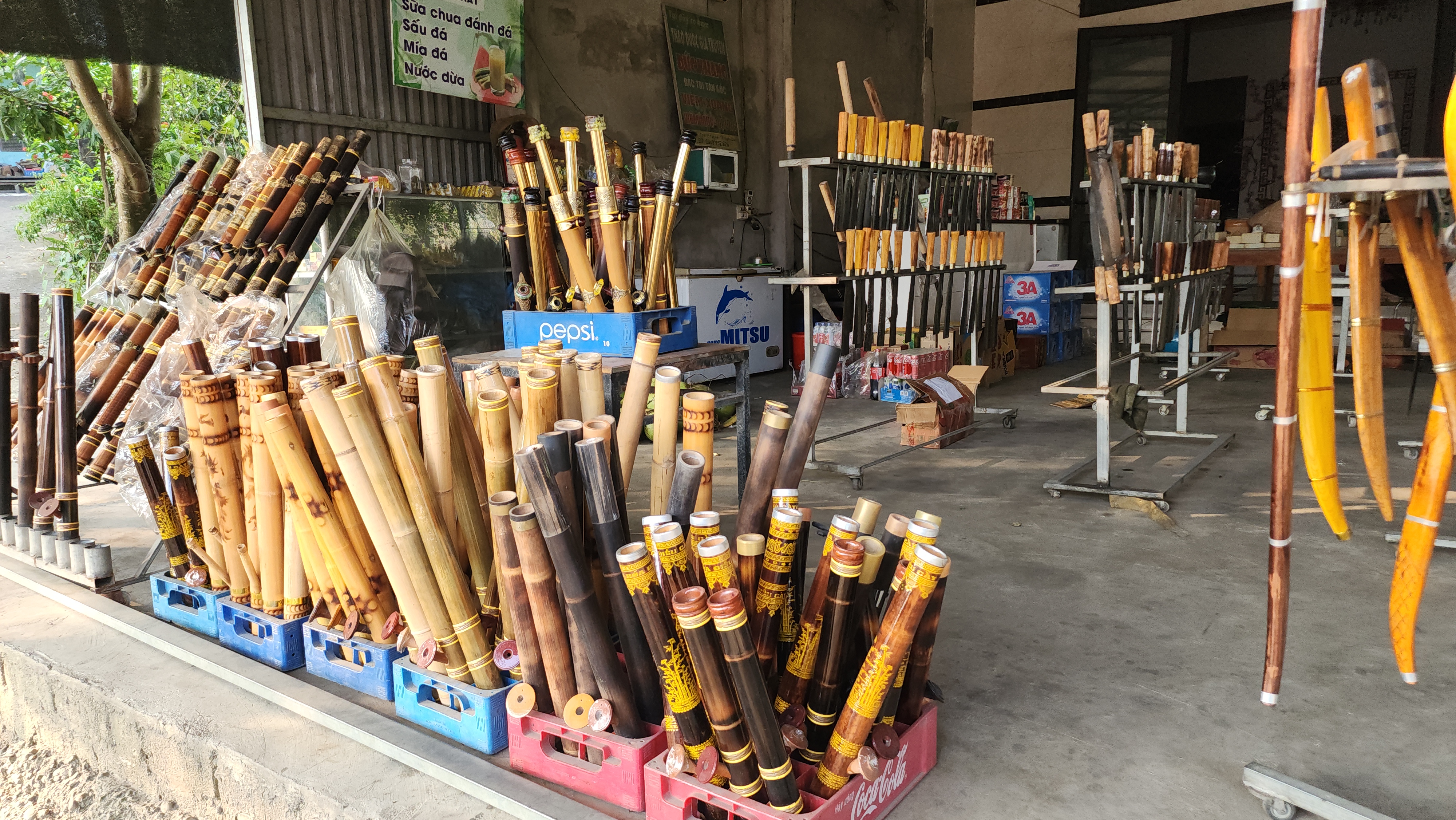
Alongside was a green tea and water-pipe-smoking table, both tea and tobacco leaves provided free of charge. The tobacco is apparently super strong. This roadside stall also had a fighting cock breeding yard out the back and sold kitchen knives and water-pipe smoking pipes.
In quite a number of towns there were, in the words of our guide, ‘happy women's parties’ happening. The red and white marriage parties need to cater for three meals, lunch, dinner and then lunch again and can have up to 700 guests. These didn't look that big, but imagine the cost of having to cater for not one meal but three wedding feasts! Weddings are an autumn affair. Summer is too hot and the food goes off too quickly, and spring is too rainy.
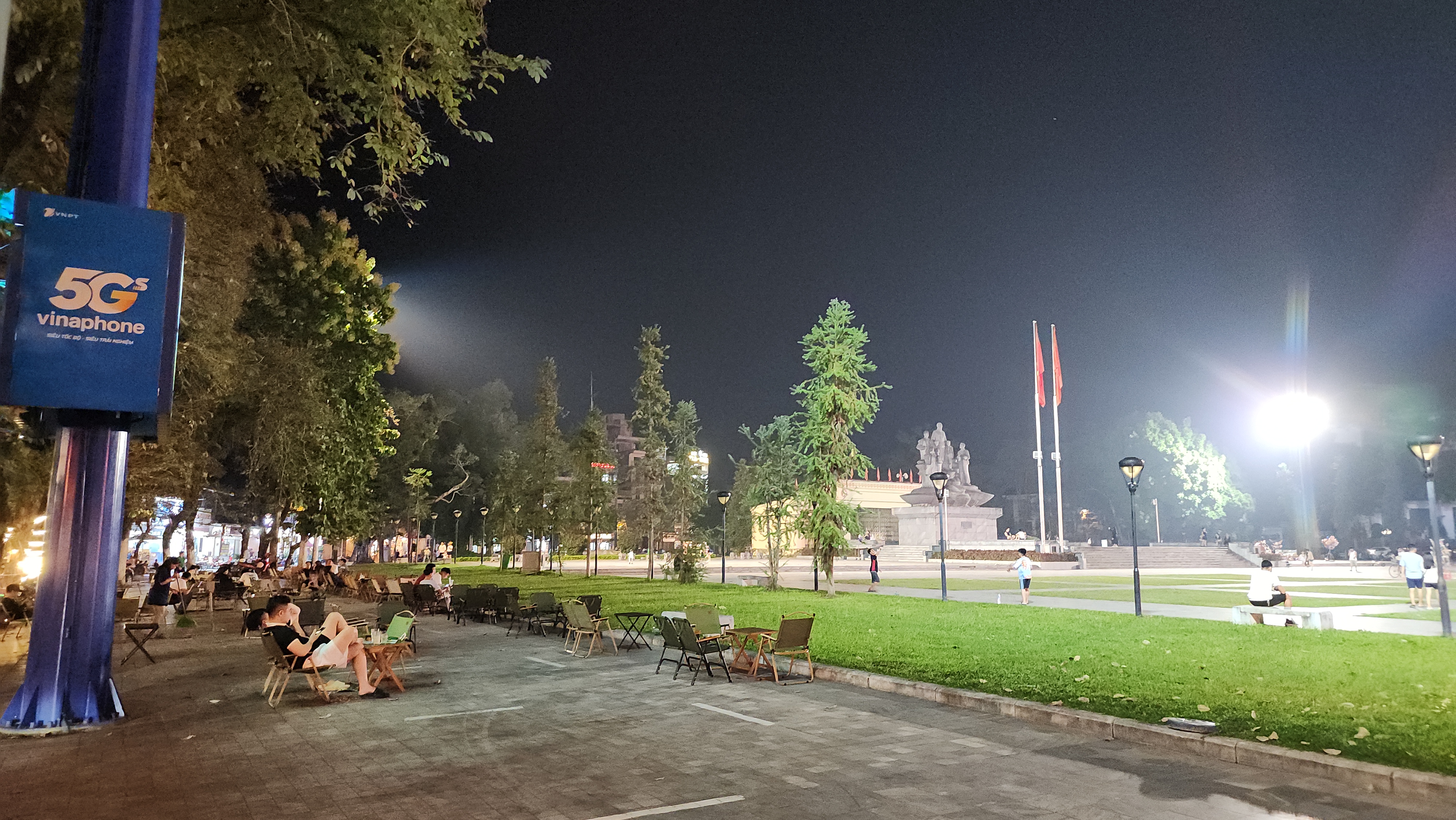
We continued our long drive into the dark, finally arriving at our hotel in Ha Giang. After dinner, where we mistook the scissors placed on the table as scissors for the chicken rather than scissors for the bread (ha!), and where we shared the restaurant with a rowdy group of Vietnamese tourists who must have undertaken about 30 ‘cheers’ equivalents ( 1, 2, 3 yo!), we went for a 2km walk up to the centre town square.
We again saw many examples of the local housing architecture.
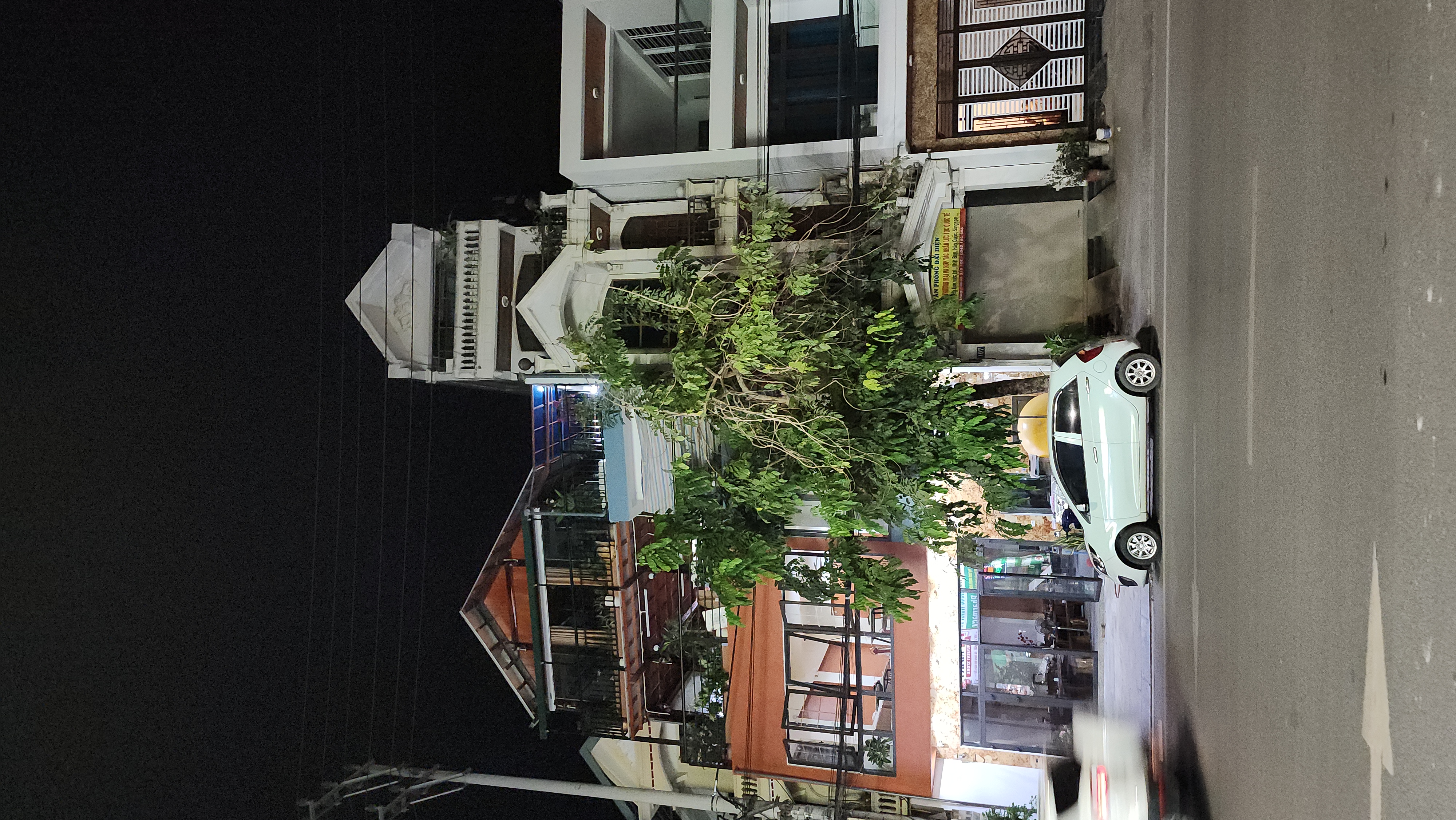
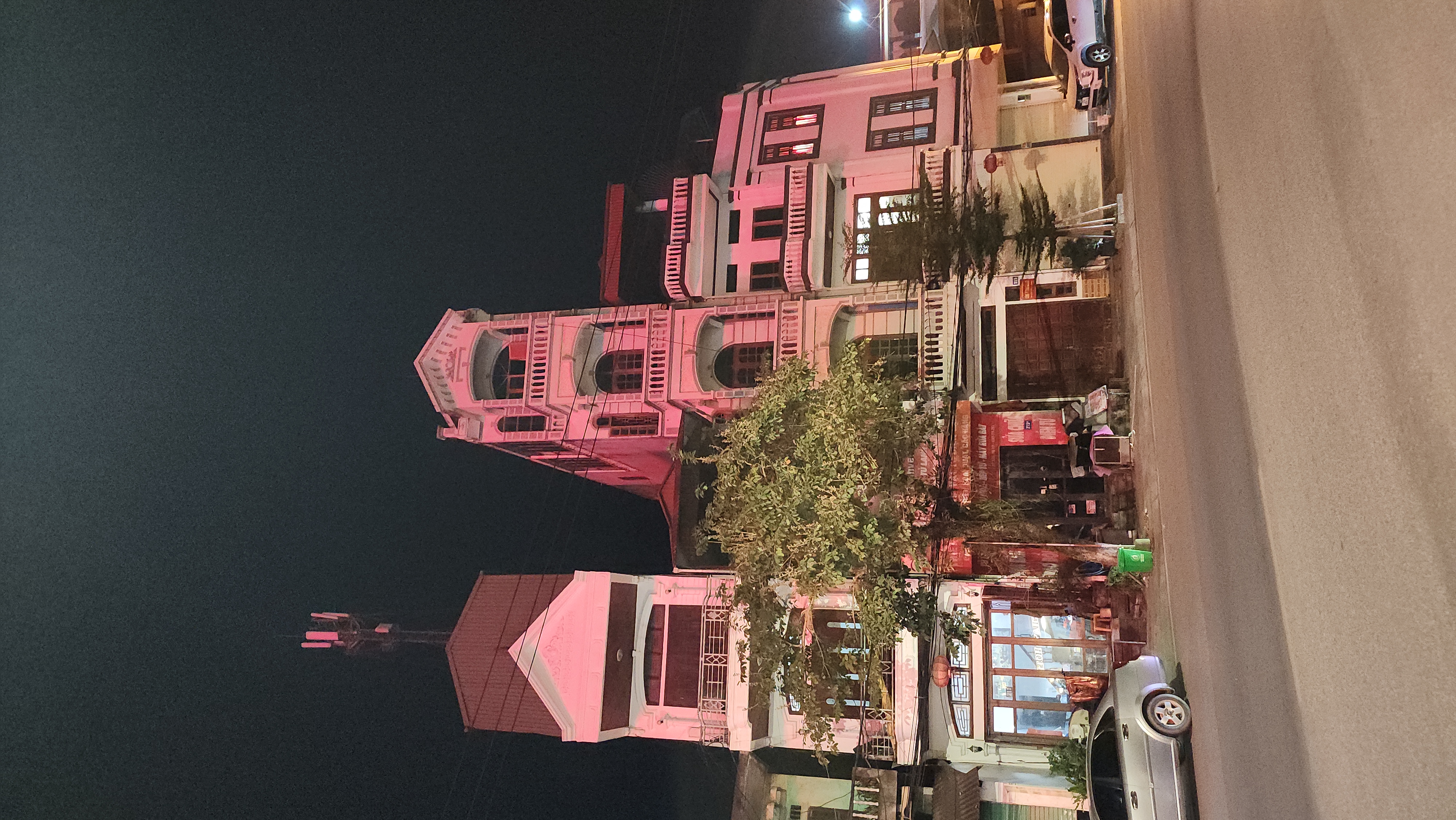
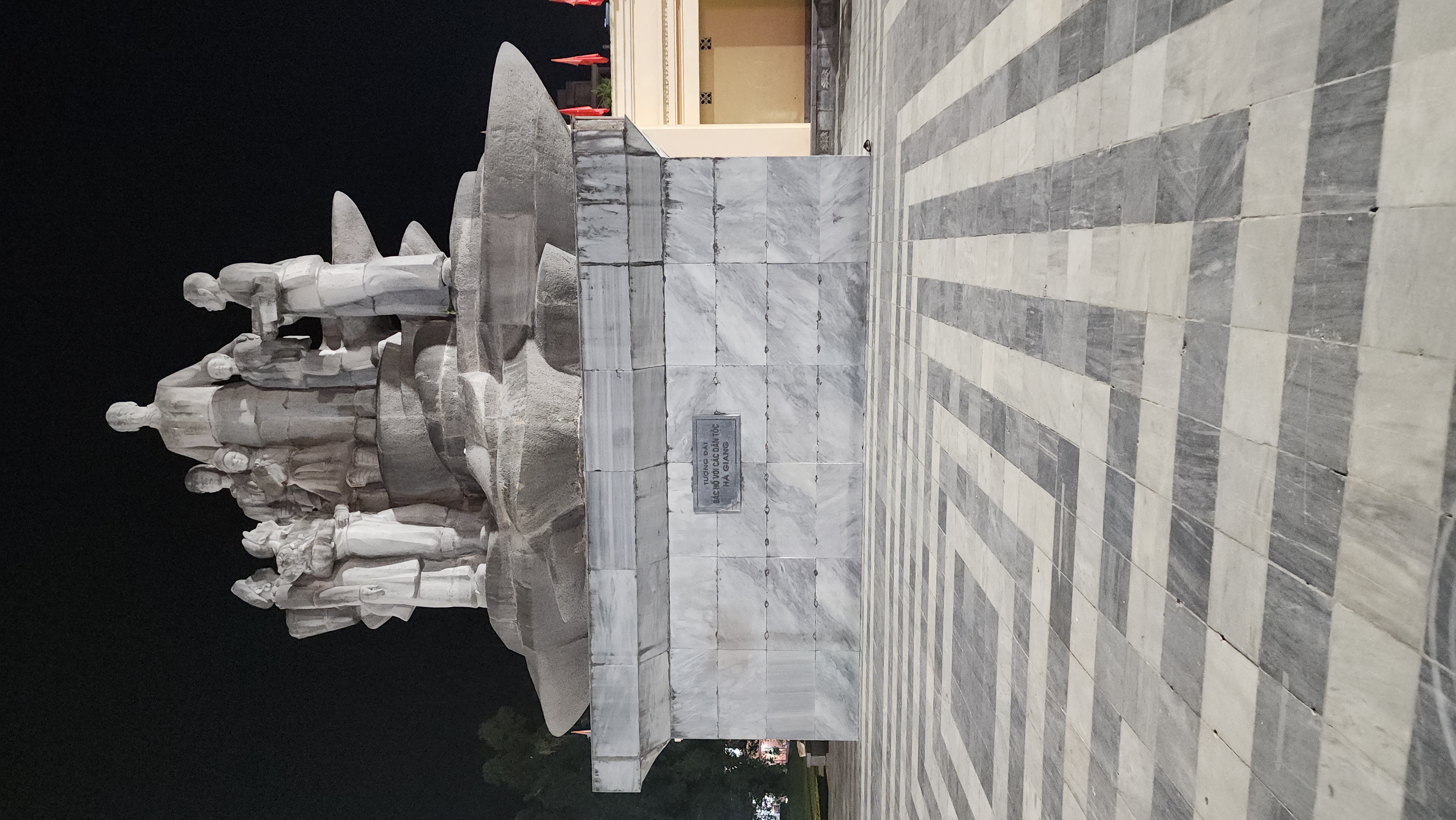
When we reached the square, there were many others enjoying the space and coming to look at the statue of Ho Chi Minh with the ethnic minorities.
We fell into bed after the 2km walk back to the hotel.
Day 3 (Oct 29) - Ha Giang to Guan Ba: Having arrived at our hotel when it was dark and misty, imagine our surprise when we woke up in the morning to this view.
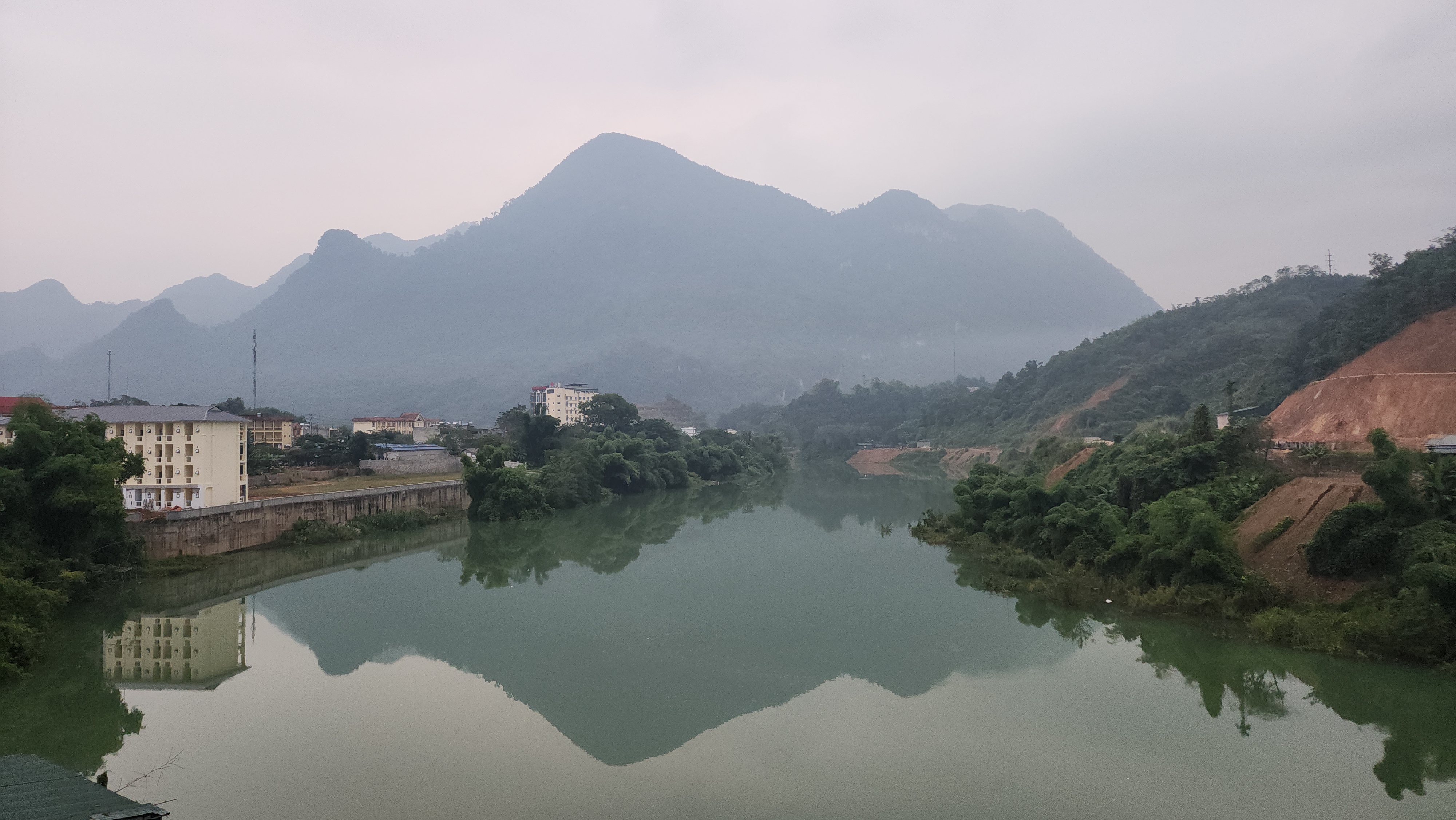
We actually were in the mountains! Our day started by an 8am visit to the local Immigration Office. Apparently it is necessary for anyone going up past Ha Giang to have permission to visit the border region, the border being that with China. Fortunately, Dat, our guide, did all the necessary paperwork.
We next visited a new museum that had been built in Ha Giang to better explain the geology and the cultural diversity of this region.
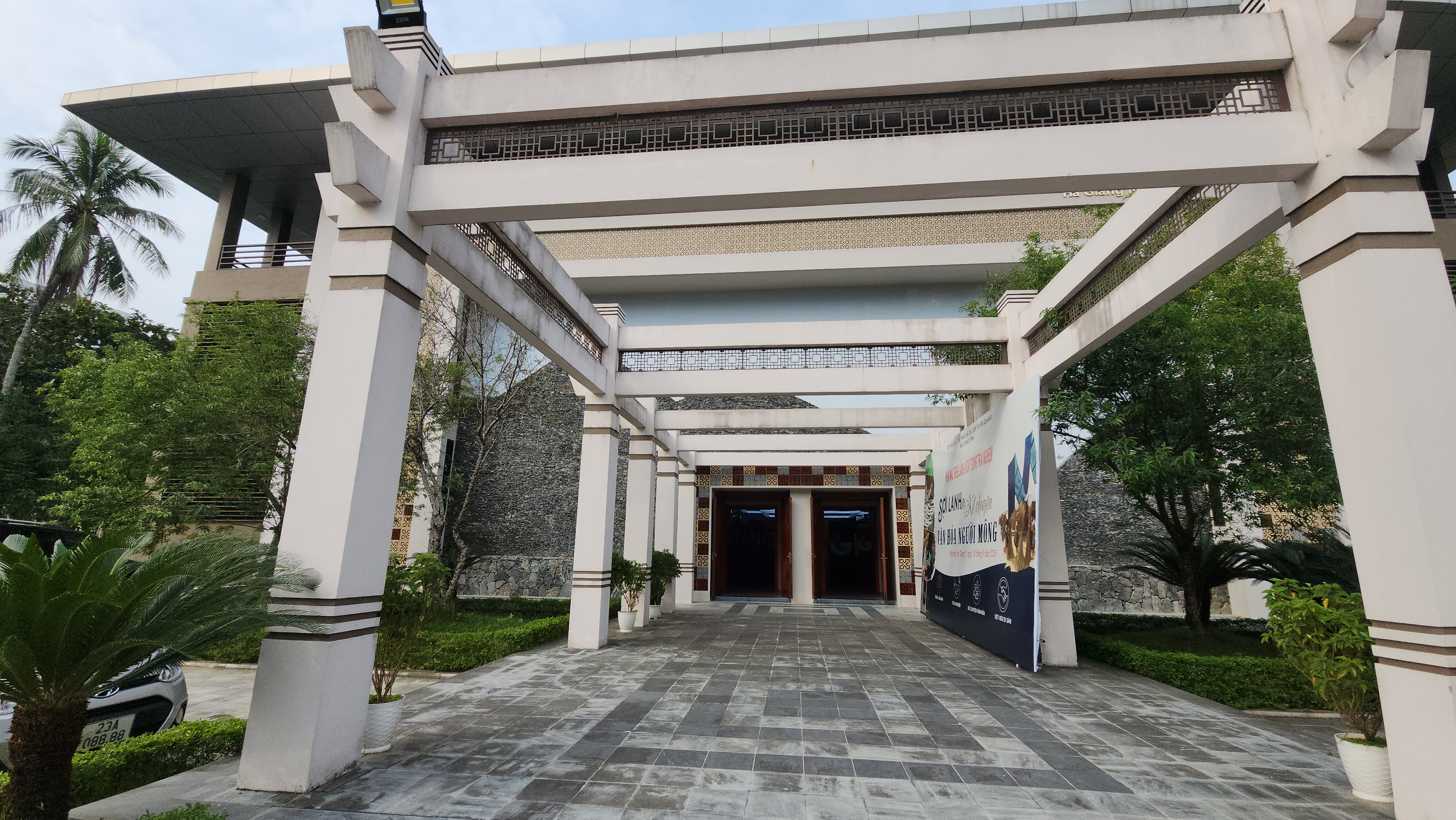
This whole area was once under the sea as evidenced by trilobite fossils and is made up of lots of limestone. The karst formations, pointy or otherwise odd-looking mountain formations, for which this region is famous, were explained. Some sort of chemical reaction occurs with the the underlying limestone to dissolve it. There are are number of ethnic minorities in this area, including three the H'Mong, the Dao (pronounced Zao) and the Lo Lo peoples, communities of which we will be visiting during our time in the area.
We also saw examples of large brass drums that are particular to this region, slightly different ones for different ethnicities. In Hanoi the is currently being built what will be the world's largest football specific stadium. Its architecture is based on these drums (the photo is not mine). The first photo is of a typical drum, the second is a rendition of the future stadium.


When we left the museum the two girls at the ticket desk offered us some guava and gave us a sesame rice cracker about the size of a bread and butter plate to try. Yum!
Outside, the restaurant/cafe specialises in making corn noodles. Seeing the different stages was fascinating.


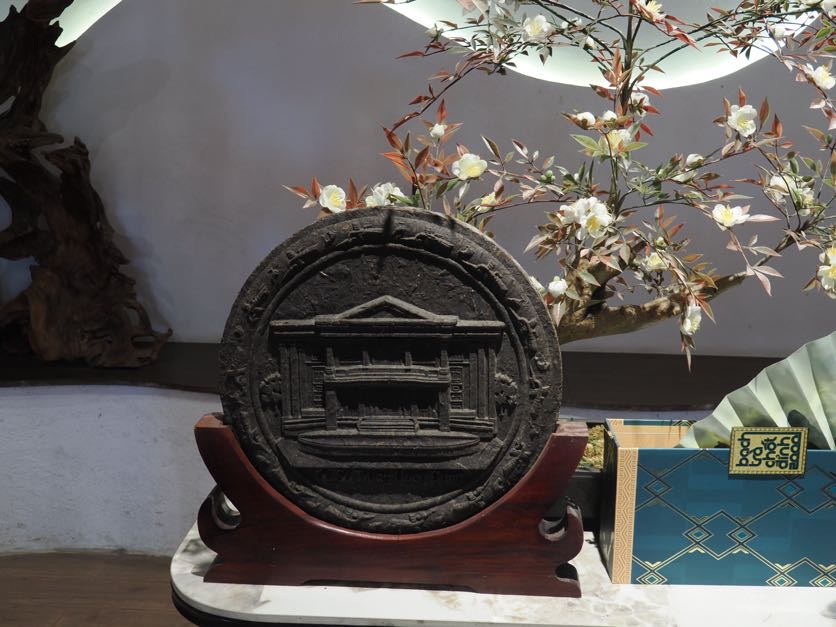
Next stop was a tea factory where we hope to see tea processing. However we learned that mornings are not a good time to do so because the factory was waiting for the farmers to bring in their tea at that time. We did see girls sorting the leaves into different grades though, and also saw some of the tea cakes and bricks this particular place is famous for. One can cost many thousands of dollars.
We hit the road again, heading towards Quan Ba and the Dong Van Karst Plateau, a UNESCO listed geopark.
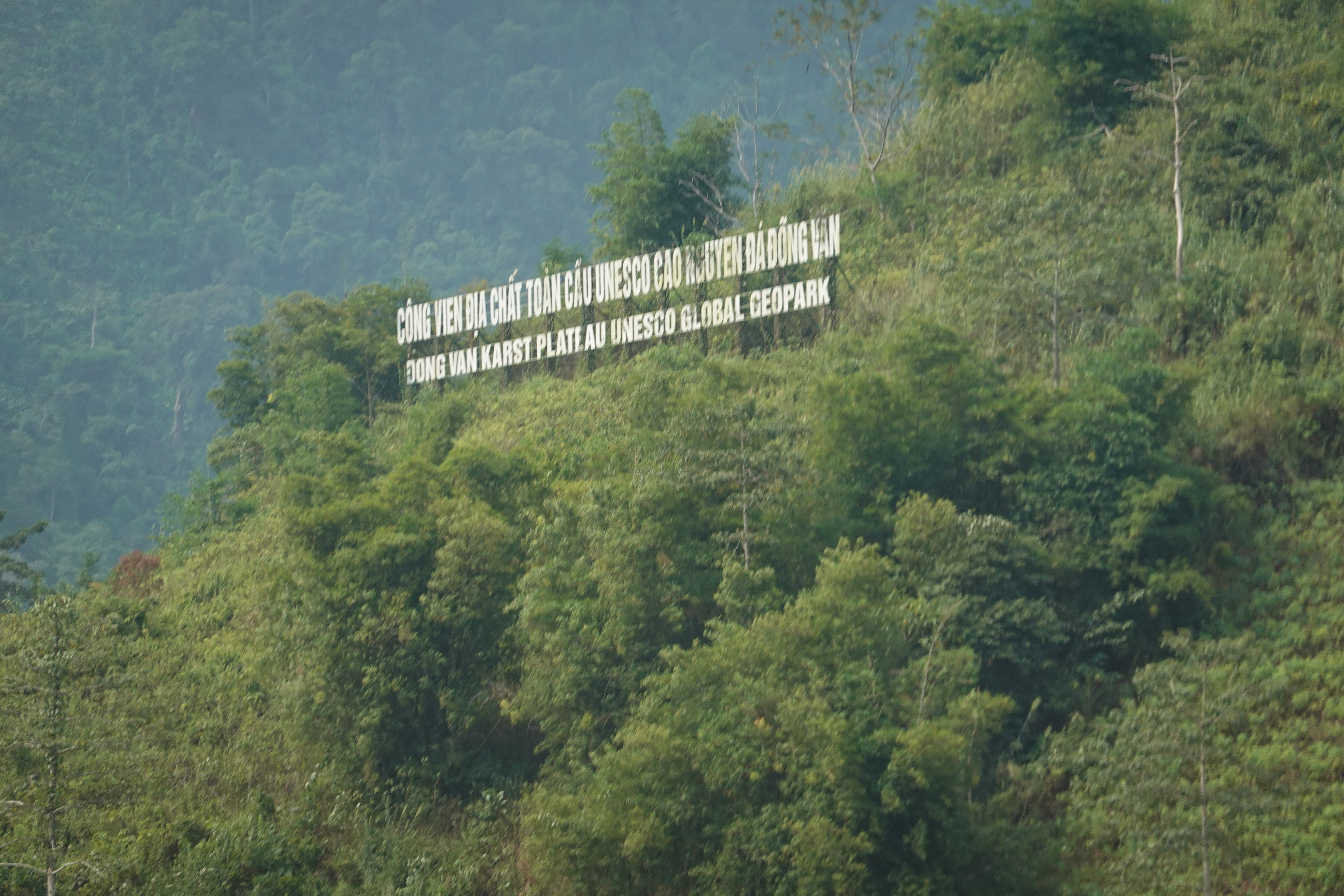
Tourism started in 2010 in this region when local officials in Ha Giang decided that all cars should be cleaned, at low cost, before entering the city because of the dusty nature of the roads. This aroused the curiosity of the rest of the country who began coming in droves to see what it was all about. The sheer number of people coming meant the government decided to improve the infrastructure and paved the roads. Now, what is known as the Happiness Road, has become a popular tourist route especially for young people on motorcycles. Many are Vietnamese but more and more foreigners are coming.
It is hard to conceive of the numbers of motorcyclists doing their circuit of the Ha Giang Loop. Most are Vietnamese but there are quite a number of foreigners as well. This is dangerous driving. The mountain roads are not for the faint--hearted and fortunately most people seem to do it as a pillion passenger with an experienced driver. Nevertheless there are plenty of accidents. We fortunately did not witness one. A few near misses.

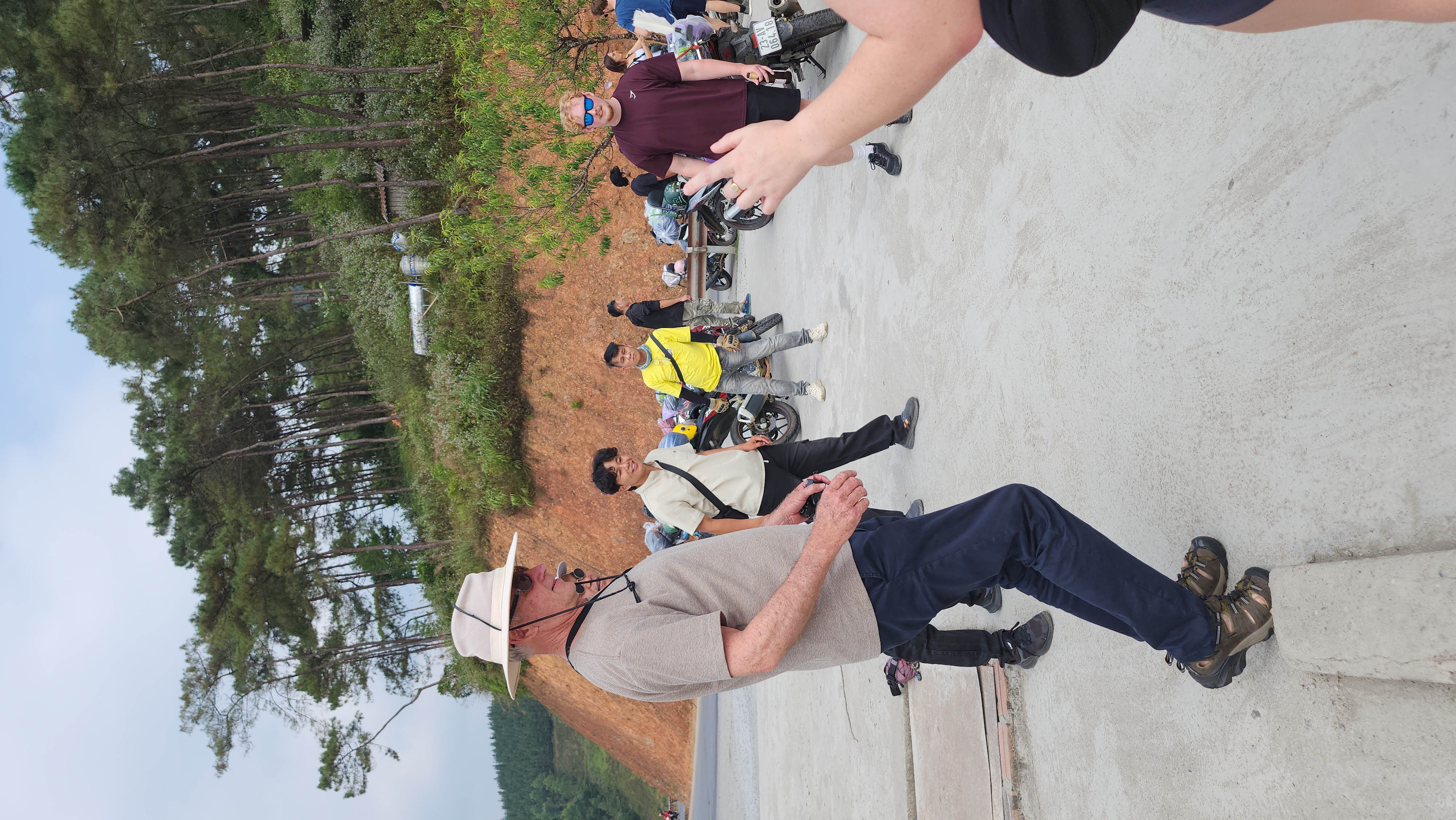
We stopped at our first viewing point for morning tea and were introduced to what is apparently a nationwide socialising game of kick badminton where participants stand in a circle and kick a shuttlecock that appears to be made with a feather somehow stuck into a number of large aluminium washers. Good fun.
Not too much further up the road we stopped to climb up to another lookout, this time over the town of Guan Ba. What an incredible landscape!


After a huge lunch at some roadside stop, we looked in at a buckwheat and flower farm. At this time of the year the buckwheat should be blossoming prolifically, but the rains were poor during the growing season this year and as a result, there aren't so many farms to see. Many of the tourists would be here hoping to see the buckwheat and accompanying festivals.


Finally we ended up at a Dao Village, called Nam Dam, where we stayed for the night. The houses are all made from rammed earth and our cabin was no different.


The government here has encouraged villages to welcome tourist by building ‘homestays’ in an attempt to show Vietnamese that this is part of Vietnam and to help raise these communities out of poverty. I hope it is not an attempt to Vietnamise their cultures. However, the people we met were genuinely friendly and the children greeting us and high-fiving Pete as they rode past.
While we did not really have much to do with the family whose place we stayed in, they cooked us dinner in their local style and shared their homemade rice wine (happy water in vietnamese lingo) which is stored in large pottery vats sunk into the ground.

We had enough time in the afternoon for a 2 km hike down to a local waterfall. Walking through the Dao village was fascinating. So many, but not all, the families are building tourist accommodation, but at the same time they are carrying on with their everyday life, farming, going off to school or other work.


Along the climb back up we saw a small clump of bamboo with funny slits in it. We were told that people make these slits when they hear grubs inside the bamboo. The grubs are said to be delicious when roasted.

All along the walk, through both village and forest, much to my delight, we saw lots of butterflies. Here are photos of a few.


Before we got back to our accommodation, we went into another place where our guide knew the people. They were outside drinking tea, and smoking the water-pipe. We met a grandmother and her very cute grandson. The men shared a pomelo with us, offering it with salt and chilli. We had been offered salt with the guava at the Ha Giang museum previously but had not realised that this is a common custom with some fruits here.


Back at the cabin and before dinner, we enjoyed a beer on our back terrace watching the bees and butterflies.

Day 4 (30th Oct) - Nam Dam to Dong Van: Today was a huge day with not only a lot of mountain driving but also a number of varied stops. Not long after starting out, we stopped at the Lung Tam Linen Weaving Cooperative in the village of Lung Tam. We were lucky to see the whole process of converting the hemp plant into thread, then into material, and decorating it.


The women then make bags and cushion covers which are, of course, for sale. Did we buy something? Of course! Apparently visitors do not always see the whole processs since the women might be out working the fields, harvesting or doing their own work around their own houses. They work to their schedule not the tourists’. Watching the women was fascinating. They make it all look so easy but we learned that at least one part of the process, which we were able to try, was anything but. Here, the woman stands on a very large flat stone that balances on a log. The dyed material is placed between the two and the woman rocks the stone from side to side to soften the fibres. The tiny woman who demonstrated did it so easily. We caused much hilarity as we failed, as would most visitors I guess. Not sure where my videos of our failures got to. Suffice to say none of us managed one proper rock!


Our next stop was at the H'Mong King's Palace, built sometime around the 1890s. The man was a self-elected 'king' of the H'Mong people was the head of the Vuong family. He was rich and a good strategist and saw value for his people (and himself no doubt) in heading the opium trade with the French in this region. In turn, the French encouraged him, believing it helped secure the remote borderlands from any Chinese threat.
The Palace is built in the shape of the Chinese character for King and incorporates Chinese and French elements. The king even took a French lady as his third wife!


Pete even managed to scramble into one of the security turrets.

After we left the palace, the scenery continued to be stunning.


Somewhere we came within 100m of the Chinese border - a looong security fence.

We followed the border for quite a way until we came to a place called Lung Cu, where there is a famous Instagrammable flag tower. The Vietnamese have had a flag on this hill for centuries in one form or another to ensure that their territory is acknowledged by China. It is a weird place to enter because the Vietnamese Government seems to be making a new model town here. There is a wide avenue being constructed and nearby a huge Buddhist Pagoda on an area where I have seen no others of any size. The people here are more likely to worship their ancestors.


The flag tower itself is impressive and the view from the top wonderful. It is erected on the top of Dragon Mountain and has great national significance since there has been some sort of flag here to designate Vietnamese territory for about 1000 years. It is 54 square metres in size, each square metre representing one of Vietnam's 54 ethnic groups.


There was one impressive-looking homestay there where cabins have been built in the same shape as the traditional brass drums.


It was well worth the effort and was such a welcome break from the car.
The walk starts at a monument that celebrates the building of the Happiness Road.


The first part is shared with some, fortunately not many, motorbikes that take people to a good viewing spot, and also some local farmers' bikes. As we were walking along this section we almost missed the view to our rear.

Besides the natural scenery, it was truly amazing to see where people farm. The steepness is difficult to gauge from photos but even attempting to go down would require way more courage than Pete, the guide and me put together (and the guide is a professional whitewater paddleboarder).

The terrain is incredibly rocky and the farmers can sometimes only plant one or two corn or grass plants in little bits of earth between rocks. Getting a whole crop must take a huge effort.


Part way along the walk is a large cave/ overhang from which you get a fantastic view. While we were there a young Vietnamese couple came to take their Instagram copy shot, only to be disappointed and surprised at how the cave looked. The Photoshopped version looked nothing like the real thing. Nevertheless, I'm sure they got their shot and doctored it to look as good as all the others. Me being cynical? Probably. The shots below are of stalactites that seem to have formed around tree roots.


Here are some of my shots from along the way. The first one shows where the path is in relation to the road below.


We had hoped to lunch at a restaurant with a good view of the river that lies far below the Skypath, but the other tourists had filled it up so we ventured a little further to a too-expensive but nice restaurant (catering for the foreign tourists) without a view, in the town where we would spend the night, Meo Vac.
Then we had what was probably the most bizarre experience we have had in a long time, a boat ride on the Nho Que River to see what is apparently the very famous Tu San Canyon, South-East Asia's deepest canyon.
When we arrived we gasped at the number of motorbikes, hundreds of them.


Then, after buying tickets for the ride, we had to wait for ages for little shuttle buses to take us down to the boats.

When we started waiting the queue number was in the 70s. Our number was 135! Yep, quite a wait. While we were waiting I noted the number of people, especially women, dressed in outfits that were weirdly unsuitable for a boat ride. Satin dresses, tulle skirted dresses that looked more appropriate for a school formal than a boat ride. There were matchy-matchy couples and young people with what they no doubt thought was great fashion.


At this attraction I would say the Vietnamese to foreign tourist ratio would have been 200 to 1. A full 20 minutes of the 30 minute boat ride would have been taken up with people passing for photos on the front of the boat with the canyon as background.
I did get some photos of the canyon and the view up to where we had walked the Skypath earlier (last photo).


The wait for transport back to the ticket office was abysmally long so we decided to walk halfway and get our driver to meet us there. The whole event was quite the experience but one I will not be in a rush to repeat.
We were not sure what our accommodation was going to be in Meo Vac but it turned out to be the restored home of a rich H’Mong businessman of the French opium trade era (1930s). To get there we had to be dropped off on a street and walk up a small lane for about 100m.


The restoration was excellent with bathrooms and toilets placed outside as they would have been 100 years ago. There were three bedrooms and a communal living space upstairs with none of the walls reaching the ceiling giving all the visitors visual but not aural privacy. The trip across the 6 inch threshold from communal living area to the steep stairs for anyone needing the toilet was somewhat hazardous and so rooms were provided with a chamber pot, just in case people didn't want to navigate those dangers in the middle of the night.


As with our other homestays, we were provided with a large varied meal that was way more than we needed.

So we attempted to walk it off by going to explore the town at night. There was plenty happening in the centre, with a big screen, dancing and later karaoke with roadside stalls everywhere, people doing dance classes, others playing soccer in the town square and nearby park.


Peter enjoyed these things more than me because I ventured to have a wash, cut and blow-dry at a hair salon. I'll have one of those every week I think until my hair is short! The washing was more thorough than any I've ever had and it even included my ears! Total cost? The equivalent of 11 Australian dollars. I walked back to our accommodation feeling pampered.
Day 6 (Nov 1) - Meo Vac to Khoui Khon village nr Bao Lac: Our morning began with a visit to the Meo Lac Sunday market. This is not a tourist market but rather a trading market for the locals that sells anything and everything: live pigs, dogs,cats, birds and bullocks; Chinese and local herbal medicines and lucky charms (one was the pelt of a wildcat that is supposed to ward off evil spirits in the culture of one of the ethnic groups); fresh and dried produce; handspun hemp thread; housewares and clothing plus much more. Many different ethnic groups are represented as both stall holders and buyers. It is an extraordinary place. Here are a few sample photos of the people and the stalls.
This lady had just purchased a piglet (zoom in).


We declined an invitation to join the celebrations for the completion of a new house in the village. Apparently it involves a 2-day party with a lot of drinking of ‘happy water’. We had just wandered up the track to see the new house and another part of the village. Here is a picture of the new house and its older neighbour.

Some other random village photos follow.


Apparently the typhoon in 2024 had caused a lot of damage in the village and it was only recently back to normal. Our homestay was evidenced of the damage. Outside, the remains of what had been the communal area were visible. Getting rid of this is near impossible, since the concrete slab would need to be chipped apart by hand and getting the remains down the 4km of track and beyond was, and still is, an insurmountable hurdle. This is remote country.

We finally made it back to our accommodation and relaxed over another huge dinner and perused photos for what remained of the day.

Day 7 (Nov 2) - Khoui Khon Village to Hanoi: My original plan had a stop between these two places but scheduling of other things meant a long drive today. Fortunately we stopped to strech our legs a couple of times for photos or food or toilet stops but still it took close to 10 hours to cover the approximate 350 kms! These mountain roads are slow-go areas. In many places the official speed limit is 80 kph but you are lucky to get above the low 30s. My head was spinning each time we stopped but somehow I survived.

We passed through more interesting scenery, regions where the rice was only just being harvested; a town where every second house had a tobacco leaf drying kiln; sugar cane that looked like trees - apparently they trim the bottom leaves to make the sugar sweeter and to prevent a build-up of snakes in the fields; more wonderful mountain scenery; then mega-huge factories of companies like Samsung that are withdrawing out of China and coming to Vietnam instead. Samsung's factory alone employs 40,000 people.


Nevertheless we ventured out for a meal and discovered we were hungrier than we had thought!


Comments
Post a Comment